Cryptocurrency mining hardware
Bitmain: the company behind Antminer and the mining industry it shaped
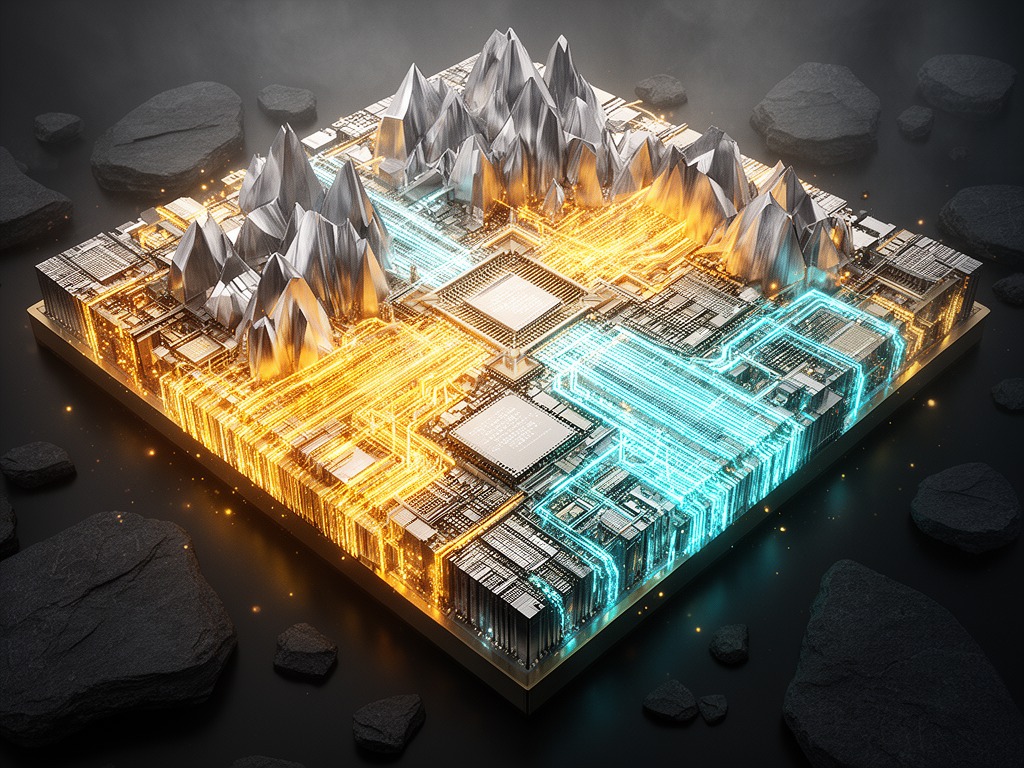
1. Overview
Bitmain is a technology company best known for designing and manufacturing application specific integrated circuit (ASIC) chips used to mine cryptocurrencies, most famously Bitcoin. Founded in Beijing in 2013, Bitmain grew from a small startup into one of the most influential hardware makers in the digital currency world, and its Antminer product line became the default choice for individuals and industrial operators alike. If you have seen a photograph of a warehouse packed with humming silver boxes, there is a strong chance those boxes were made by Bitmain.
The core idea behind Bitmain is simple to state and hard to execute. Proof of work mining rewards whoever can compute cryptographic hashes fastest and most efficiently, so Bitmain designs specialized chips that do nothing except that one calculation, but do it far faster than any general purpose processor. By concentrating on this narrow task, Bitmain turned a hobbyist activity into an industrial supply chain, and in doing so the company became a central player in how the Bitcoin network is secured.
This page explains what Bitmain is, how its hardware works, which product families it sells, the mining pool and services it operates, and the practical and reputational issues that surround the company. The goal is to give a reader a clear, honest picture of Bitmain without hype and without dismissing the genuine engineering that made it significant.
Throughout the cryptocurrency industry, Bitmain is treated as both a bellwether and a benchmark. When Bitmain releases a new Antminer generation, competitors and miners recalculate their economics around it, because the efficiency of Bitmain hardware directly affects who can profitably mine and at what electricity price. That gravitational pull is what makes Bitmain worth understanding in detail.
Key takeaway
Bitmain makes the ASIC mining machines, sold under the Antminer brand, that convert cheap electricity into cryptocurrency hashing power. Its efficiency gains and market share have made Bitmain a defining force in proof of work mining.
2. History and background
Bitmain was co-founded in 2013 by Micree Zhan and Jihan Wu. Wu came from a finance and translation background and had been an early promoter of Bitcoin in China, while Zhan was the engineer who led chip design. That pairing of a market-facing founder and a hardware architect is a big part of why Bitmain moved so quickly in its early years.
The company shipped its first Antminer, the S1, in late 2013. It was modest by later standards, but it established the pattern Bitmain would repeat for a decade: identify the most efficient chip process available, design an ASIC around it, and ship a self-contained mining unit that ordinary buyers could plug in. Each subsequent Antminer generation from Bitmain pushed hash rate up and energy cost per hash down.
By the mid 2010s, Bitmain had captured a dominant share of the ASIC market. The scale of that dominance, combined with its ownership of large mining pools, made Bitmain one of the most powerful entities in the entire Bitcoin ecosystem. At its peak the company was reported to be extraordinarily profitable, riding the cryptocurrency price surges of that era.
Bitmain filed for an initial public offering in Hong Kong in 2018, a move that would have made it one of the largest technology listings connected to cryptocurrency. That application lapsed without completion. The period around it was turbulent for Bitmain, with market downturns and heavy inventory pressure squeezing the business.
The years that followed were marked by a public and prolonged struggle for control between the two founders. The dispute over leadership of Bitmain played out openly and disrupted operations, before eventually being resolved in a way that reshaped the company's ownership and direction. Through all of it, Bitmain continued to ship Antminer hardware, which speaks to how deeply the product pipeline was embedded in the business.
More recently, Bitmain has diversified geographically and technically, expanding manufacturing and sales beyond China, responding to regulatory shifts, and pushing into adjacent computing markets. But the identity of Bitmain remains anchored to mining hardware, and that is still where its influence is greatest.
3. How Bitmain hardware works
To understand Bitmain, you need to understand what a mining machine actually does. Bitcoin uses a proof of work consensus mechanism based on the SHA-256 hashing algorithm. Miners repeatedly guess a value that, when hashed together with block data, produces an output below a target threshold. There is no shortcut; you simply try enormous numbers of guesses. Whoever finds a valid answer first earns the block reward.
Because the work is pure brute force, the machine that computes more hashes per second and burns less power per hash wins economically. This is the exact problem Bitmain optimizes. A Bitmain ASIC is a chip physically laid out to do SHA-256 and only SHA-256, with the hashing pipeline etched into silicon rather than run as software. That specialization is why a Bitmain Antminer outperforms a graphics card by orders of magnitude for this task.
Three numbers describe any Bitmain machine. Hash rate, measured in terahashes per second (TH/s), is how many guesses it makes. Power draw, measured in watts, is how much electricity it consumes. Efficiency, measured in joules per terahash (J/TH), combines the two and is the single most important figure, because it determines profitability once electricity is factored in. Bitmain competes primarily on lowering J/TH.
A typical Bitmain Antminer is a self-contained metal box holding multiple hash boards populated with ASIC chips, a control board that manages the machine and connects to the network, and one or more powerful fans that push a huge volume of air through the unit. Many Bitmain units are extremely loud and hot, which is why they usually live in dedicated facilities rather than living rooms.
Once running, a Bitmain miner connects to a mining pool, receives work assignments, computes hashes, and submits valid shares. The pool aggregates the hashing power of thousands of machines and distributes rewards proportionally. This pooling model is why even a single Bitmain unit can earn steady, predictable payouts instead of waiting years to find a block alone.
Bitmain also produces air cooled and liquid cooled variants, and hydro or immersion ready models for large operations. Liquid cooling lets a Bitmain machine run at higher power and hash rate while managing heat, and it is a growing part of how Bitmain serves industrial customers who want maximum density per square meter.
4. Bitmain product lines
The flagship Bitmain product is the Antminer, and within that brand there are several algorithm families. The Antminer S series is the SHA-256 line built for Bitcoin and other coins that share its algorithm. This is the range that made Bitmain famous, running through generations such as the S9, S17, S19 and later S21 families, each a large efficiency jump over the last.
Bitmain does not only make Bitcoin machines. The Antminer L series targets Scrypt, the algorithm used by Litecoin and Dogecoin, which are merge mined together. The Antminer K and other lines have targeted algorithms such as those used by Kaspa and other altcoins. By covering multiple algorithms, Bitmain hedges against any single coin and serves a wider mining audience.
The Antminer S9 deserves special mention because it became one of the most widely deployed mining machines ever made. For years the S9 was the workhorse of the network, and even after Bitmain moved on to newer models, secondhand S9 units kept running wherever electricity was cheap enough. That longevity is part of the Bitmain story.
Later Bitmain flagships such as the S19 series and the S21 series pushed efficiency into new territory, with hydro cooled and immersion variants offering the lowest joules per terahash Bitmain has shipped. These machines are aimed squarely at industrial miners for whom a small efficiency edge, multiplied across thousands of units, is decisive.
Beyond miners, Bitmain has developed AI and general computing hardware under separate branding at various points, applying its chip design expertise to other high-throughput workloads. That effort has been less central to Bitmain's public identity than mining, but it reflects the same underlying capability: designing custom silicon for a specific heavy computation.
5. AntPool and Bitmain services
Bitmain is not only a hardware maker. It has long been associated with mining pools, most notably AntPool, which has consistently ranked among the largest Bitcoin mining pools in the world. Through AntPool and related interests, Bitmain has influenced not just the machines that secure Bitcoin but also a large fraction of the hashing power itself.
This dual role, controlling both hardware supply and significant pool capacity, is exactly why Bitmain draws so much scrutiny. A company that sells the machines and also aggregates a big share of network hash rate holds unusual leverage in a system designed to be decentralized. Understanding Bitmain means holding both facts in view at once.
Bitmain also supports customers with firmware, monitoring tooling, warranty and repair services, and regional sales and distribution channels. For large buyers, Bitmain provides the logistics of moving thousands of units, along with the technical documentation needed to deploy them at scale. These services are a meaningful part of why industrial miners keep returning to Bitmain.
The firmware that ships on Bitmain machines matters more than it might seem. It governs how the unit tunes voltage and frequency, how it reports health, and how securely it operates. Third party firmware exists for many Bitmain models, offering features like auto-tuning and finer control, and its popularity is itself a sign of how large the installed base of Bitmain hardware has become.
6. Bitmain versus other mining hardware
Bitmain is the market leader, but it is not the only ASIC maker. The table below compares Bitmain against the general categories of alternatives a miner considers. It describes typical positioning rather than any single model.
| Criterion | Bitmain (Antminer) | Other ASIC makers | GPU rigs |
|---|---|---|---|
| Market share | Dominant | Smaller, competitive | Niche for SHA-256 |
| SHA-256 efficiency | Industry leading | Often close, sometimes ahead | Not competitive |
| Availability | Wide, high volume | Variable | Broad, consumer channel |
| Resale market | Deep and liquid | Thinner | Very liquid |
| Flexibility | Single algorithm per model | Single algorithm per model | Multi-algorithm |
The practical summary is that for Bitcoin and other SHA-256 coins, Bitmain and its direct ASIC rivals are the only serious options, and Bitmain usually leads on availability and resale depth even when a competitor briefly edges it on raw efficiency. GPU rigs no longer make sense for SHA-256, though they remain relevant for other cryptocurrencies that Bitmain does not target.
7. Efficiency progress across Bitmain generations
The clearest way to see what Bitmain has achieved is to look at how energy per unit of work has fallen across Antminer generations. Efficiency is measured in joules per terahash, where lower is better. The bars below show the broad, illustrative trend of Bitmain improving efficiency generation over generation; treat them as directional rather than exact.
Relative energy per terahash (lower is better)
Illustrative trend based on Bitmain public product positioning. Exact figures vary by model and cooling type.
This downward staircase is the whole competitive game for Bitmain. Each new generation makes older Bitmain machines less profitable, which is why the resale value of Antminer units tracks so closely to the arrival of the next Bitmain release. A miner buying Bitmain hardware today is really buying a position on this efficiency curve.
8. Buying and setting up Bitmain hardware
If you are considering Bitmain hardware, the process follows a fairly consistent sequence. These steps are a genuine order of operations, not a marketing checklist.
-
1
Confirm your electricity cost
Before buying any Bitmain machine, know your price per kilowatt-hour. Efficiency figures from Bitmain only translate into profit if your power is cheap enough. This single number decides more than the model choice.
-
2
Choose the right Antminer model
Match the algorithm to the coin you want and the cooling type to your site. Bitmain sells air and hydro cooled versions; the hydro units need plumbing and are for larger deployments.
-
3
Buy from a legitimate channel
Use official Bitmain sales or a reputable authorized reseller. The mining hardware market has a long history of scams, so verifying the seller matters as much as the Bitmain spec sheet.
-
4
Prepare power, cooling, and noise control
A Bitmain unit needs a suitable circuit, strong airflow or liquid cooling, and a location that can tolerate serious heat and noise. Plan the environment before the machine arrives.
-
5
Connect to a pool and monitor
Point the Bitmain machine at a mining pool, set your payout wallet, and watch temperatures and hash rate. Steady monitoring is how you protect the investment your Bitmain hardware represents.
9. Risks, criticism, and controversy
A fair page about Bitmain has to cover the downsides, because they are real and well documented. The most persistent concern is centralization. When one company designs most of the machines and also runs large pools, Bitmain concentrates influence in a network whose whole value proposition is that no single party is in charge. Critics have argued for years that Bitmain's position is uncomfortable for Bitcoin's decentralization narrative.
There is also the environmental question. Proof of work mining consumes large amounts of electricity, and because Bitmain supplies so much of the hardware doing that work, Bitmain is frequently named in debates about the energy footprint of cryptocurrency. Bitmain's efficiency gains reduce energy per hash, but rising total hash rate can offset those gains at the network level.
Buyers face financial risk that has nothing to do with Bitmain's engineering. Mining profitability depends on coin price, network difficulty, and electricity cost, all of which move independently. A Bitmain machine can be excellent and still lose money if the market turns, and secondhand Bitmain units have at times sold for a fraction of their original price during downturns.
The company itself has weathered serious internal turmoil, including the well publicized founder dispute and the lapsed public offering. Regulatory shifts, particularly China's crackdown on mining, forced Bitmain and its customers to relocate operations, and geopolitics around chip supply and export continue to shape what Bitmain can build and sell.
Finally, the mining hardware sector is plagued by counterfeits, delivery scams, and inflated resale listings that trade on the Bitmain name. The strength of the Bitmain brand is exactly what makes it a target for bad actors, so buyer caution is not optional. None of this erases what Bitmain built, but a clear-eyed reader should weigh the engineering achievement against these genuine risks.
10. Frequently asked questions
What does Bitmain actually make?
Bitmain designs and manufactures ASIC cryptocurrency mining machines, sold under the Antminer brand, along with related firmware and services. Bitmain also operates mining pool interests such as AntPool.
Is Bitmain the same as Antminer?
Antminer is the product brand and Bitmain is the company that makes it. When people say they run Antminers, they are running hardware produced by Bitmain.
Which cryptocurrencies can Bitmain machines mine?
It depends on the model. Bitmain S series machines mine SHA-256 coins like Bitcoin, the L series targets Scrypt coins such as Litecoin and Dogecoin, and other Bitmain lines target additional algorithms. Each machine is fixed to one algorithm.
Is mining with Bitmain hardware profitable?
It can be, but it is not guaranteed. Profit with Bitmain hardware depends on your electricity cost, the coin price, and network difficulty. Cheap power is usually the deciding factor.
Why is Bitmain controversial?
Because Bitmain has held a dominant share of mining hardware while also running large mining pools, some worry it concentrates too much influence over a network meant to be decentralized. Energy use and past internal disputes have also drawn criticism.
How loud and hot is a Bitmain miner?
Very. Air cooled Bitmain units produce intense fan noise and significant heat, which is why they are usually installed in dedicated facilities rather than homes. Hydro cooled Bitmain models manage heat differently but need plumbing.
Where should I buy Bitmain hardware safely?
Buy through official Bitmain sales channels or verified authorized resellers. The market has many scams that misuse the Bitmain name, so confirming the seller is as important as checking the specifications.